
Author
Nahid Komol
Published
November 11, 2025
Human Written
If you're planning to start an online store in 2025, one of the first questions you'll face is this: Should you sell digital products or physical products?
Choosing between the two isn't just about what you like. It's about how people shop, what sells faster, and how you plan to grow your business.
Some sellers find success with digital products like online courses, templates, or software. Others build brands around physical items like apparel, gadgets, or handmade goods.
In this guide, we'll break down the complete comparison between digital products vs physical products, explore how the market is changing, and help you figure out what to sell in 2025.
Understanding the eCommerce landscape
Online business selling in 2025 looks very different from what it did just a few years ago. Buyers now expect faster service, easier payments, and more personalized experiences. The line between physical and digital sales is getting thinner as more people mix both.
According to industry reports, global eCommerce will reach around $7.4 trillion by the end of 2025. Digital goods alone are estimated to make up nearly 24% of total online transactions, showing how much value people place on instant access and convenience.
Two significant trends stand out this year:
- Digital-first consumer habits — more customers now prefer downloadable or on-demand products like templates, AI tools, or memberships.
- Sustainable shopping — buyers are becoming more conscious about packaging, shipping, and eco-friendly brands when it comes to physical goods.
At the same time, the number of small businesses joining the market keeps rising, making competition more challenging than ever. That's why choosing the right type of product, digital or physical, can directly impact how fast you grow.
What are digital products?
Digital products are items that are created, sold, and delivered online. They don't require physical inventory, packaging, or shipping. Once purchased, they can usually be downloaded or accessed instantly.
Common examples of digital products:
- Online courses and eBooks.
- Design templates and stock photos.
- Software, plugins, and mobile apps.
- Memberships or premium content.
- AI tools and virtual products.
What makes digital products appealing is how easy they are to create and scale. Once made, you can sell them again and again with no shipping or storage cost. They also fit perfectly with the growing trend of digital vs physical selling, where more creators and educators focus on value-driven, instantly accessible products.
The rise of AI has also made it simpler to create, distribute, and even personalize digital goods from AI-powered templates to automated design tools. That's why digital assets are now among the best products to sell online if you want low costs and global reach.
What are physical products?
Physical products are tangible items that need to be manufactured, stored, and shipped to the customer. Unlike digital products, these require handling logistics such as packaging, delivery, and returns.
Common examples of physical products:
- Clothing, shoes, and accessories.
- Electronics and gadgets.
- Home and kitchen items.
- Beauty and personal care products.
- Handmade or customized goods.
Even with the rise of digital sales, physical items still dominate global eCommerce. In 2025, physical goods account for more than 75% of online revenue, driven by everyday essentials and consumer trust in tangible products.
Many brands now use advanced tools to make physical selling easier automated inventory tracking, faster shipping, and better packaging options. With platforms like the ZOYEQ eCommerce platform, store owners can manage stock, orders, and customer data in one place.
Pros and cons of selling digital products
Selling digital products has become a key part of modern eCommerce. Creators, freelancers, and even large brands are now offering downloadable or subscription-based items.
Why selling digital products makes sense
- Low overhead: You don't need to manage physical stock, rent warehouse space, or worry about packaging. This keeps operational costs low.
- Higher profit margins: Since there's no cost of goods or shipping, sellers often see profit margins of 80% or more. It's one of the main reasons digital goods attract creators and startups.
- Instant delivery: Customers get access right away after purchase, which improves satisfaction and reduces support requests.
- Scalability: You can sell to anyone, anywhere, without extra cost. Whether you have 10 customers or 10,000, digital delivery works the same.
- Evergreen sales: Many digital products don't go out of date quickly, so they can keep generating sales for months or years with minimal updates.
Challenges of digital products
- High competition and saturation: Since it's easy to start selling, many niches are crowded. To stand out, you'll need strong marketing and unique value.
- Piracy/copy risks: Digital products can be easily shared or duplicated without permission. Protection tools help, but the risk remains.
- Harder to build physical trust: Some customers feel more confident buying things they can hold or see. Digital-only brands must work harder to establish credibility.
- Requires strong content/brand marketing: Since you can't rely on packaging or shelf presence, success depends on how well you present and promote your product online.
Pros and cons of selling physical products
While digital products are growing fast, physical products remain the foundation of eCommerce. Even with the growth of digital sales, most online shoppers still prefer buying items they can see and hold.
Why selling physical products makes sense
- Tangible trust factor: People trust what they can touch. Holding or using a real product builds emotional connection and brand loyalty that digital items can't always match.
- Wider consumer demand: From groceries to gadgets, physical products meet everyday needs. This makes it easier to find consistent demand in almost any market.
- Opportunities with niche products: Selling in specialized areas like eco-friendly goods, handmade items, or personalized gifts allows for strong branding and customer loyalty.
- Easier upsells: It's simpler to bundle related items, offer replacement parts, or sell subscriptions around physical products, such as refills or accessories.
Challenges of physical products
- Inventory, logistics, and shipping costs: Managing stock, packaging, and delivery takes planning and budget. These costs can multiply as sales increase.
- Risk of returns/refunds: Damaged items, incorrect orders, or unmet expectations can lead to higher return rates and additional expenses.
- Smaller profit margins than digital products: Because of production and shipping costs, profit margins tend to be lower compared to digital sales.
- Global competition in dropshipping: Dropshipping makes it easier to sell physical goods, but also increases competition. Standing out requires strong branding, quality control, and customer experience.
Digital vs physical products: Side-by-side comparison
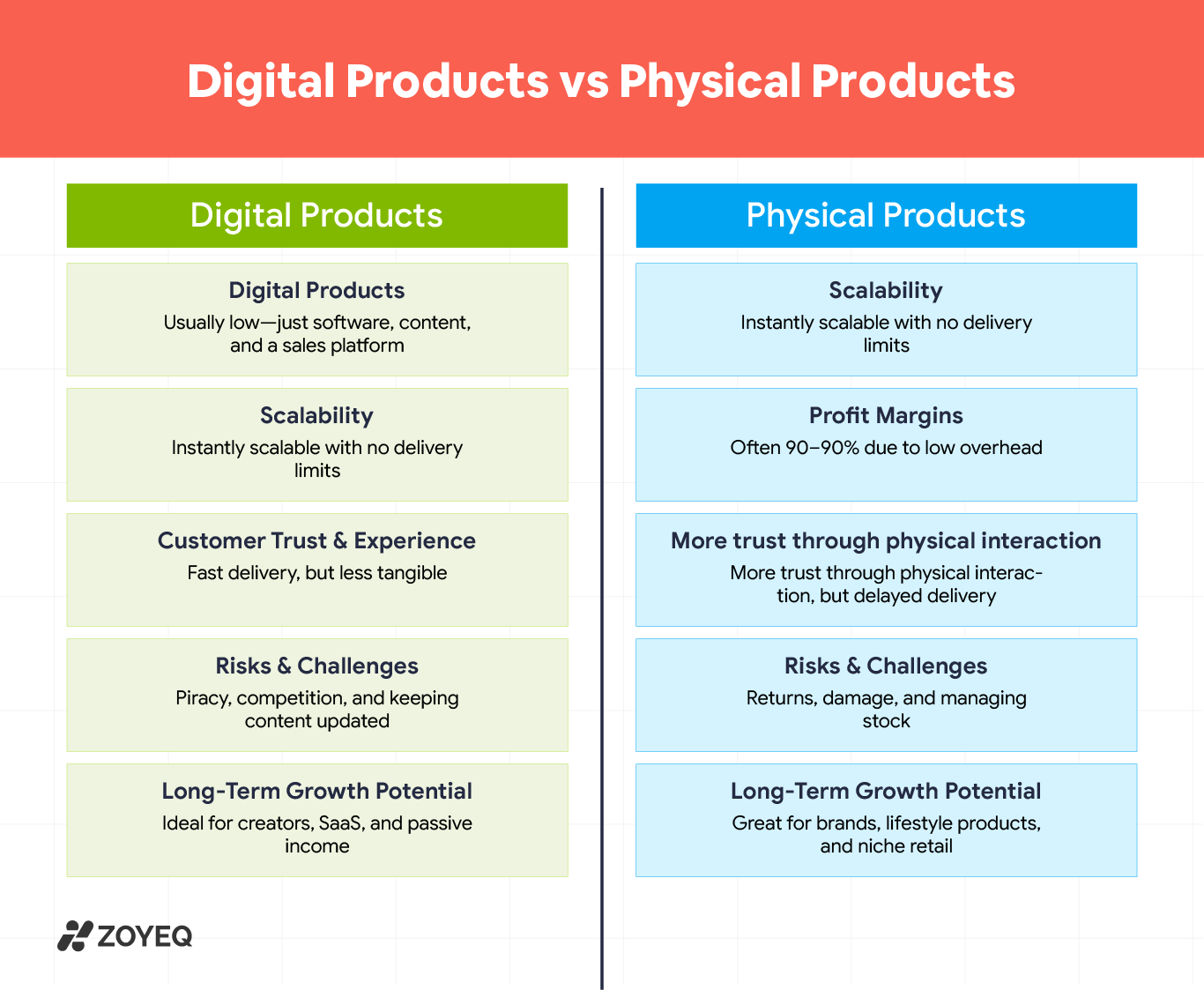
Choosing between digital and physical products becomes easier when you compare them directly. Here's a quick breakdown of how both perform in key areas like cost, scalability, profit, and long-term growth.
Cost of starting
When it comes to startup costs, digital and physical products are very different. Digital products usually have lower upfront expenses. If you're creating something like a course, template, or downloadable file, your main investment is time and the software needed to build it.
With physical products, costs add up quickly. You may need to purchase inventory, order samples, pay for packaging, and handle shipping logistics. Even print-on-demand options, while lower risk, still involve setup fees and base product costs.
Scalability
Digital products scale easily because they don't rely on physical limits. You can sell the same file, course, or license to thousands of buyers without extra production costs. There's no inventory to restock or warehouse to manage. This makes digital selling ideal for creators, educators, and software businesses that want to grow fast without heavy investment.
Physical products, on the other hand, scale more slowly. Growth often means ordering more inventory, managing more shipments and the supply chain, and possibly expanding your team or storage space. Even with automation tools and fulfillment services, the scaling process is tied to physical logistics.
💡 Takeaway: If your goal is to reach a global audience with less overhead, digital products are easier to scale. But if you want to build a tangible brand or retail presence, physical products offer a path to steady, long-term growth.
Profit Margins
Profit margins are where digital products often win. Since there are no material or shipping costs, most of your revenue is pure profit. A well-made digital product, like an online course or template pack, can earn up to 80–90% profit per sale after platform and transaction fees. Once created, it continues to generate income with minimal upkeep.
Physical products, on the other hand, usually have tighter margins. Production, packaging, delivery, and occasional returns all reduce the final profit. Even successful online stores often operate with 20–40% profit margins, depending on their pricing and logistics setup.
💡 Takeaway: If maximizing profit per sale is a priority, digital products are more efficient. That said, strong branding and customer experience can help physical products remain competitive, especially in niche markets.
Customer Trust & Experience
With digital products, trust often depends on your reputation, content quality, and how well you communicate value before purchase. Since there's nothing physical to hold, customers rely on previews, reviews, even on social media, and clear descriptions. Instant delivery is a big plus, but some buyers may hesitate if they're unfamiliar with your brand.
Physical products naturally offer a stronger sense of trust. People know what to expect, and the ability to see or touch something builds confidence. However, the delivery experience matters. Slow shipping, packaging issues, or damaged items can affect satisfaction.
💡 Takeaway: Both types can build strong customer relationships, but they do it differently. Digital products depend on quality and credibility. Physical products depend on presentation and delivery.
Risks & Challenges
Every business model comes with risks. For digital products, one of the main concerns is piracy. Once a file is out there, it can be copied or shared without permission. There's also market saturation—many niches are crowded, and it can be difficult to stand out without strong marketing.
Physical products bring a different set of challenges. Inventory management, returns, and international shipping delays can cause complications, especially when dealing with global customers. There's also the risk of damage during transit or stock that doesn't sell.
💡 Takeaway: The key difference is control. With digital products, you control most parts of the process. With physical products, outside factors — like logistics and suppliers — can impact your success.
Long-Term Growth Potential
Digital products offer strong long-term growth for creators, educators, and software developers. Once you build a library of high-quality products, you can continue to earn from them with minimal ongoing effort. Subscription models and SaaS tools also allow for recurring revenue.
Physical products are a solid option for building a brand that people recognize and trust. There's a higher chance of repeat purchases and word-of-mouth growth, especially in lifestyle or niche markets. Growth often comes from product expansion, customer loyalty, and strategic branding.
💡 Takeaway: Both paths have strong potential; however, the difference lies in your focus. Digital products grow faster with automation and content, while physical products grow stronger with branding and customer relationships.
Which one should you sell in 2025?
There's no single right answer. The best choice depends on your skills, resources, and goals. Both digital and physical products can perform well if you understand your market and plan your strategy carefully.

Digital products are ideal if you create content, teach, or build tools. They come with low overhead, instant delivery, and global reach. If you're a freelancer, educator, or creator, this model suits you well.
Physical products work better if you enjoy hands-on processes like packaging or branding. They offer tangible value and are great for niche brands, lifestyle products, or everyday items.
In many cases, a hybrid approach works best. You don't have to choose only one. For example, you can sell a physical planner and include a digital version, or offer a printed workbook with your online course.
Whatever path you choose, the ZOYEQ eCommerce platform gives you the tools to manage both digital and physical sales in one place, making it easy to scale in the direction that suits your business best.
How ZOYEQ helps you sell both
Whether you sell digital downloads or ship physical goods, managing everything from one platform saves time and effort. That's what the ZOYEQ eCommerce platform is built for. It supports both types of products — digital and physical — without needing multiple tools or plugins.
ZOYEQ gives you:
- Unified store management – Handle digital licenses, downloadable files, or physical stock in one dashboard.
- AI-powered product pages – Instantly generate high-converting product pages and landing pages with ZOYEQ AI.
- Multi-vendor flexibility – Create your own vendor store or launch a marketplace with multiple sellers.
- Seamless integrations – Connect with PayPal, Stripe, Mailchimp, and more to automate payments and fulfillment.
- Secure checkout & data protection – Built-in encryption keeps your business and customers safe.
Whether you're a digital creator, online retailer, or hybrid seller, ZOYEQ helps you scale without switching platforms. You can start small and grow fast — all from one simple system.
👉 Try ZOYEQ Free and Start Selling Today
Build your online store, create high-converting landing pages, and manage both digital and physical products — all in one platform designed for growth.
Get Started Free →FAQs
Can I sell digital and physical products on the same website?
Yes. With the ZOYEQ eCommerce platform, you can sell from one dashboard. You can list downloadable files, licenses, or physical goods, and manage them all together.
Are digital products more profitable than physical ones?
Often, yes. Digital products usually have higher margins because there are no production or shipping costs. But success depends on your niche, pricing, and marketing strategy.
What are some trending digital products in 2025?
Popular digital products include online courses, SaaS tools, design templates, premium memberships, and AI-generated resources. These continue to grow as more people look for quick, valuable solutions online.
How do I start selling products online with no inventory?
You can start with digital products or use dropshipping for physical ones. Both let you sell without managing stock. Platforms like ZOYEQ support both methods, helping you launch quickly with minimal setup.
Is ZOYEQ good for beginners?
Yes. ZOYEQ is beginner-friendly, with a simple setup process, built-in tools, and clear product management features. You don't need technical skills to start, and support is available if you need help.
Conclusion
In 2025, there's no single best answer in the digital products vs physical products debate. Both have potential — it depends on what fits your skills, goals, and audience.
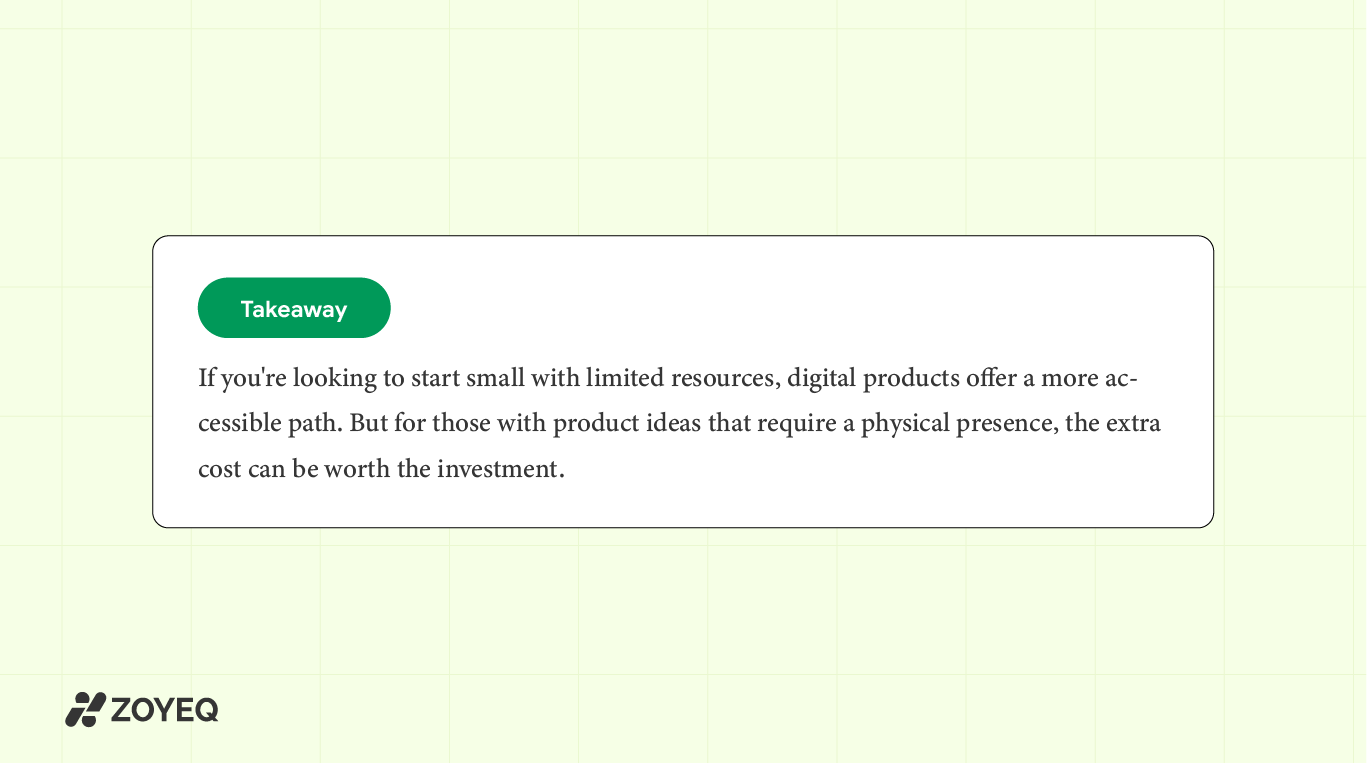
If you want low costs, easy scaling, and global reach, digital products are a great start. If you prefer tangible goods and building a strong brand presence, physical products still dominate the market. And if you want the best of both, combining them can bring steady and diverse revenue.
No matter what you decide to sell, the ZOYEQ eCommerce platform gives you the tools to launch and grow with confidence. It's built for modern sellers who want a flexible, all-in-one solution—without the complexity.